


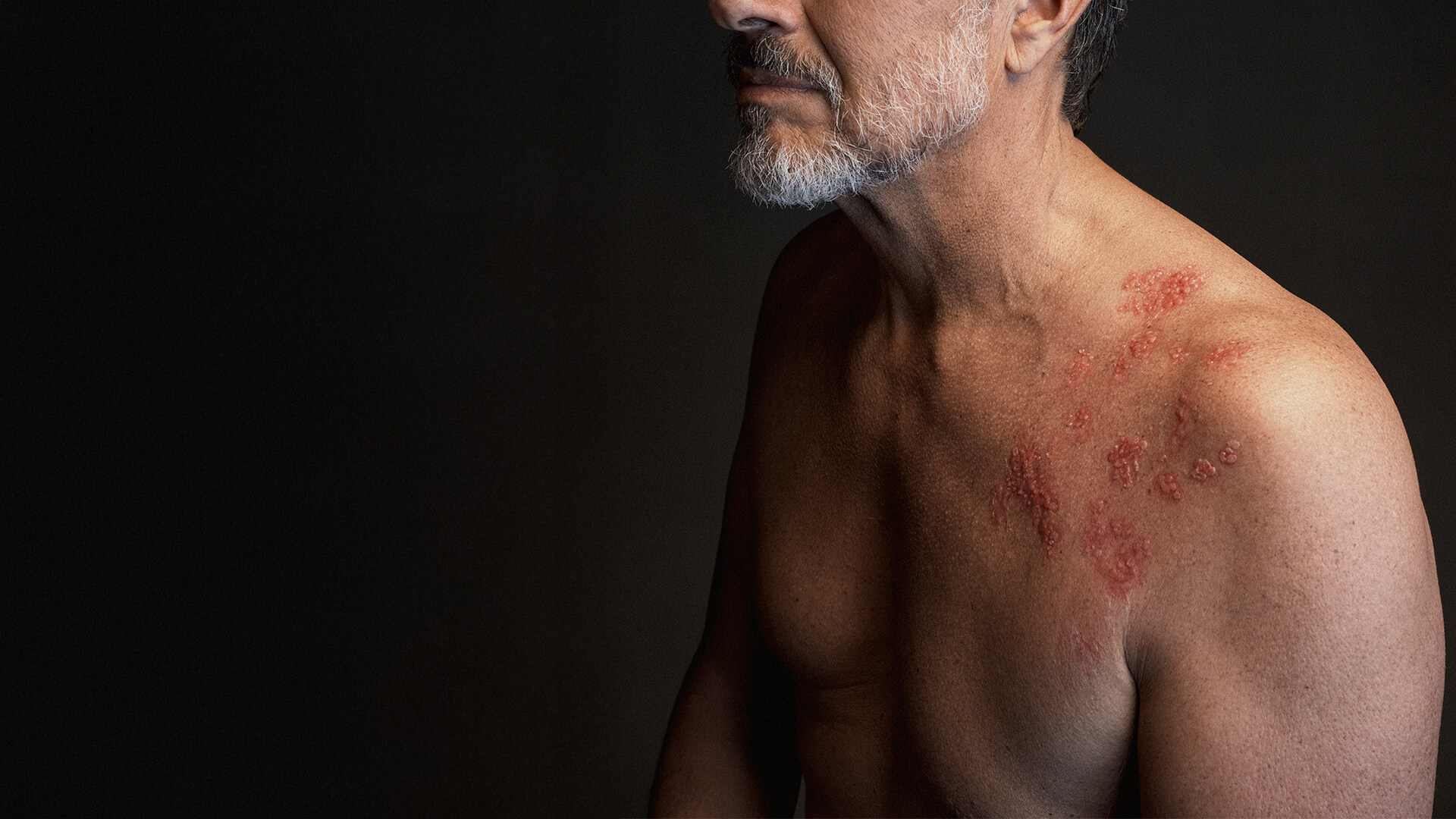
带状疱疹(生蛇)皮疹
带状疱疹是一种由病毒感染引起的疾病。它会导致疼痛的红疹出现,典型特征为身体一侧长出一长条的水疱,病程一般持续 2 到 4 周。1-3 带状疱疹在新加坡俗称为「生蛇」或 kayap ular (马来语)。
生蛇的病因是什么?
生蛇是由引起水痘的同一种病毒所导致的,这种病毒被称为“水痘-带状疱疹病毒”。1,2 在水痘痊愈后,病毒仍会潜伏于神经细胞(即背根神经节),处于非活跃状态,也不会引起任何症状。1,2 然而,病毒可能会在多年后重新激活,从而引发生蛇”。1,2
谁是高风险群体?
凡是患过水痘的人都有可能患上生蛇。不过,这种疾病在 50 岁及以上的人群†,以及免疫力较弱的人群中更为常见。1-3

生蛇的症状是什么?
生蛇的典型症状是疼痛性皮疹, 1-3,6 它通常以痛感开始,患处常被描述为有灼热感、刺痛感和抽痛感。1 其他可能出现的症状包括:发烧、头痛、发冷、疲劳及胃部不适。1,3,6
生蛇通常在身体一侧或脸部呈带状出现,1-3,6 很少跨到另一侧。 6 会出现这种独特的皮疹分布,是因为它随着受影响的神经细胞区域而出现。1-3 皮疹最常见的部位是躯干,但也可能会影响面部和眼睛周围。 1 -3,6
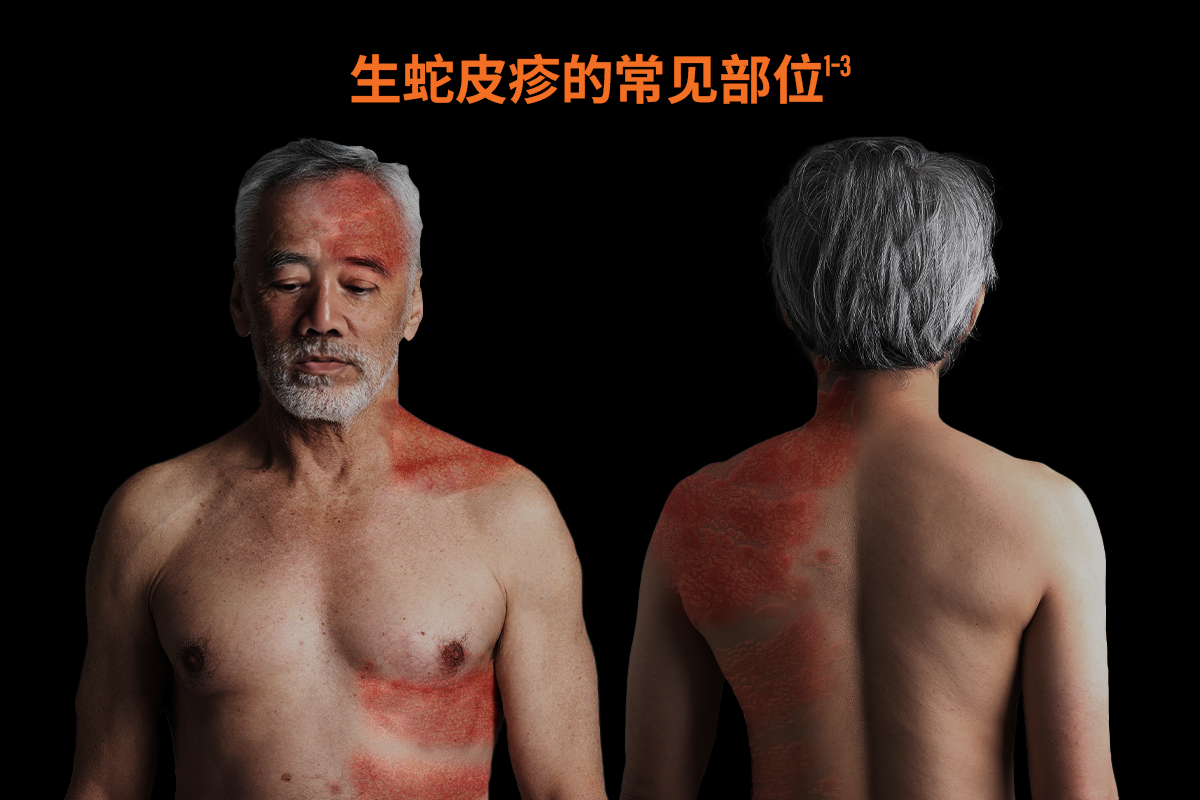
受感染区域的皮肤形成充满液体的水泡,最终会结痂并消退。6 整个过程可能持续2至4个星期。 3,6 生蛇的疼痛,通常从早期到晚期都感受得到,但也可能变成慢性疼痛,如「生蛇症状发展进程表」所示 。1,3,6
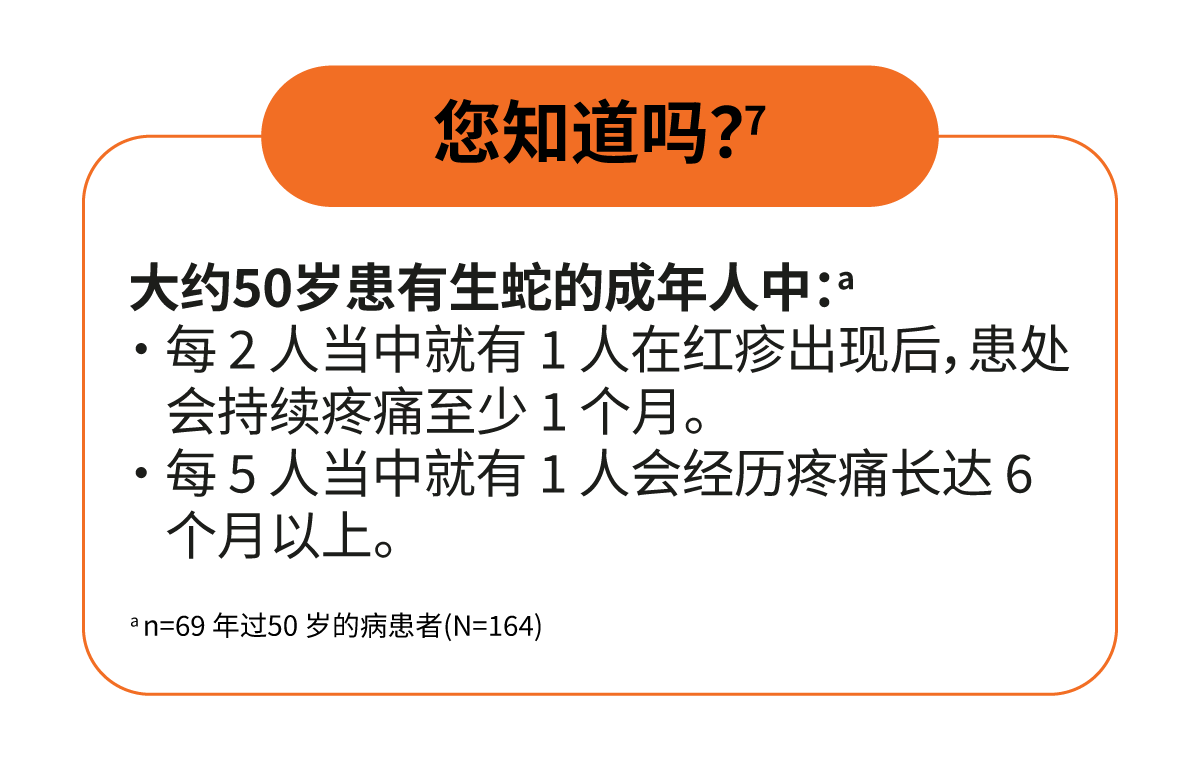
疼痛是生蛇的重要症状,通常被形容为「灼热感」、「刺痛感」和’ 「痛感」。1 在皮疹痊愈后,持续性的神经痛可能会维持数月甚至数年,有时需要服用止痛药来缓解。1-3,6
生蛇会传染吗? 生蛇如何传播?
生蛇本身不具传染性, 它不能从人传播到其他人。但是,引起生蛇的病毒却具有传染性。 1,2 如果您患有生蛇,当他人接触到您身上破裂的水疱时,有可能将病毒传染给他人,特別是那些从未得过水痘或未接种过带状疱疹疫苗的人(例如:小婴儿的父母或祖父母应特别提高警觉)。1,2
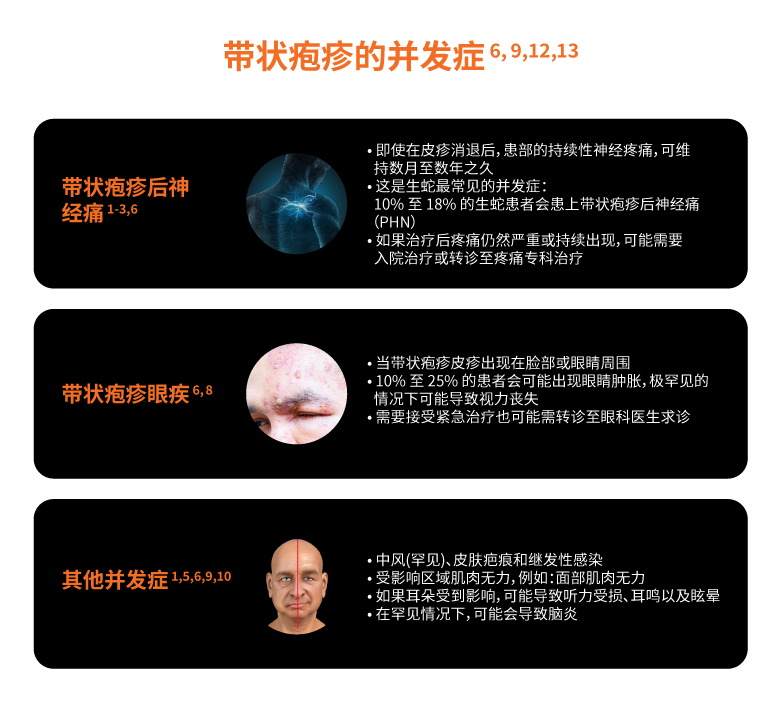
生蛇的并发症
经治疗后,多数人都会康复,且不会有并发症。3,6 然而,有些患者可能会在皮疹消失后,出现持续数月至数年的生蛇并发症。 1-3,6
生蛇对生活品质的影响
生蛇的症状和并发症可能会影响个人的日常生活,例如:阻碍工作效率、行动、睡眠和日常活动的乐趣。7 在老年患者中,疼痛本身会导致焦虑、情绪障碍和抑郁症。11 此外,照顾患者也会影响照护者或家人,损失工作时间。12
在考量生蛇的总体影响时,还需要考虑直接的开销b(例如:药物、医生诊治和住院),以及间接的损失b(例如:病假、影响工作进度)。12
您可在这里阅读真实患者描述关于生蛇的经历。
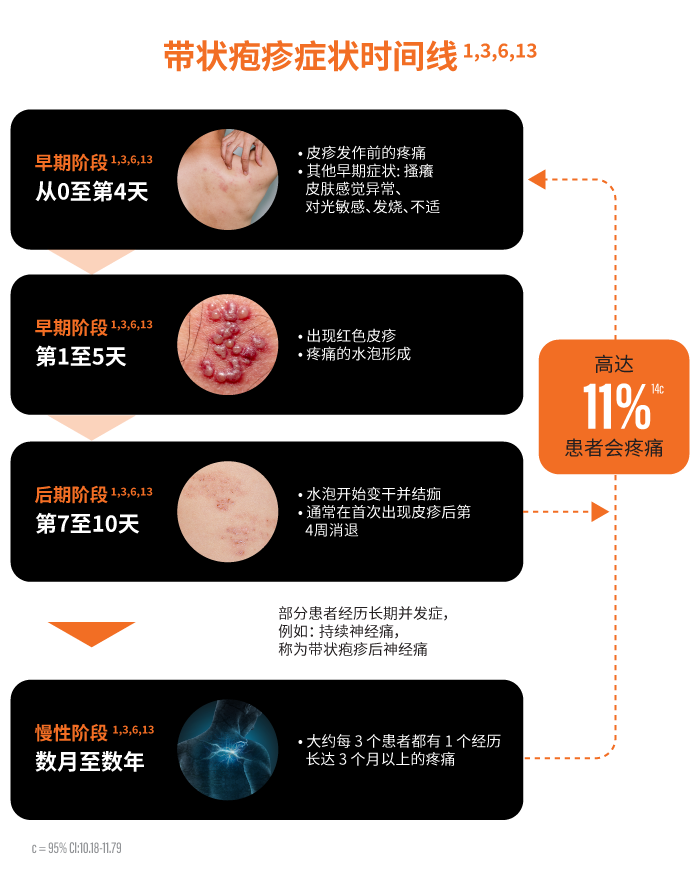
a n=69 年过50 岁的病患者(N=164)
b 根据欧盟数据
c N=11,716
- World Health Organization. Shingles (herpes zoster): Fact sheets. Available at: https://www.who.int/news-room/fact-sheets/detail/shingles-(herpes-zoster). Accessed 17 September 2025.
- Health Hub. Herpes zoster (shingles). Available at: https://www.healthhub.sg/health-conditions/herpes_zoster. Accessed 21 November 2025.
- Centers for Disease Control and Prevention. Shingles symptoms and complications. Available at: https://www.cdc.gov/shingles/signs-symptoms/index.html. Accessed 17 September 2025.
- Wang, T., et al. (2020). Quantitative proteomic analysis of human plasma using tandem mass tags to identify novel biomarkers for herpes zoster. Journal of Proteomics, 15(225):103879.
- Kilgore, P.E., et al. (2003). Varicella in Americans from NHANES III: Implications for control through routine immunization. Journal of Medical Virology, 70(Suppl 1):S111–118.
- Centers for Disease Control and Prevention. Clinical features of shingles (herpes zoster). Available at: https://www.cdc.gov/shingles/hcp/clinical-signs/index.html. Accessed 17 September 2025.
- Goh, C. L. & Khoo L. (1997). A retrospective study of the clinical presentation and outcome of herpes zoster in a tertiary dermatology outpatient referral clinic. International Journal of Dermatology, 36(9):667–672.
- Shaikh, S. & Ta, C. N. (2002). Evaluation and management of herpes zoster ophthalmicus. American Family Physician, 66, 1723–1730.
- Adour, K. K. (1994). Otological complications of herpes zoster. Annals of Neurology, 35(Suppl), S62–S64.
- Genetic and Rare Diseases Information Centre. Ramsay Hunt syndrome. Available at: https://rarediseases.info.nih.gov/diseases/7525/ramsay-hunt-syndrome. Accessed 3 December 2025.
- Oster, G., et al. (2005). Pain, medication use, and health-related quality of life in older persons with postherpetic neuralgia: Results from a population-based survey. Journal of Pain, 6, 356–363.
- Gater, A., et al. (2015). The humanistic, economic and societal burden of herpes zoster in Europe: A critical review. BMC Public Health, 15, 193.
- Johns Hopkins Medicine. Shingles. Available at: https://www.hopkinsmedicine.org/health/conditions-and-diseases/shingle. Accessed 16 December 2025.
- Tseng, H. F., et al. (2020) The epidemiology of herpes zoster in immunocompetent, unvaccinated adults ≥50 years old: Incidence, complications, hospitalization, mortality, and recurrence. The Journal of Infectious Diseases 222(5), 798–806.
- GSK 不对第三方网站内容负责。