


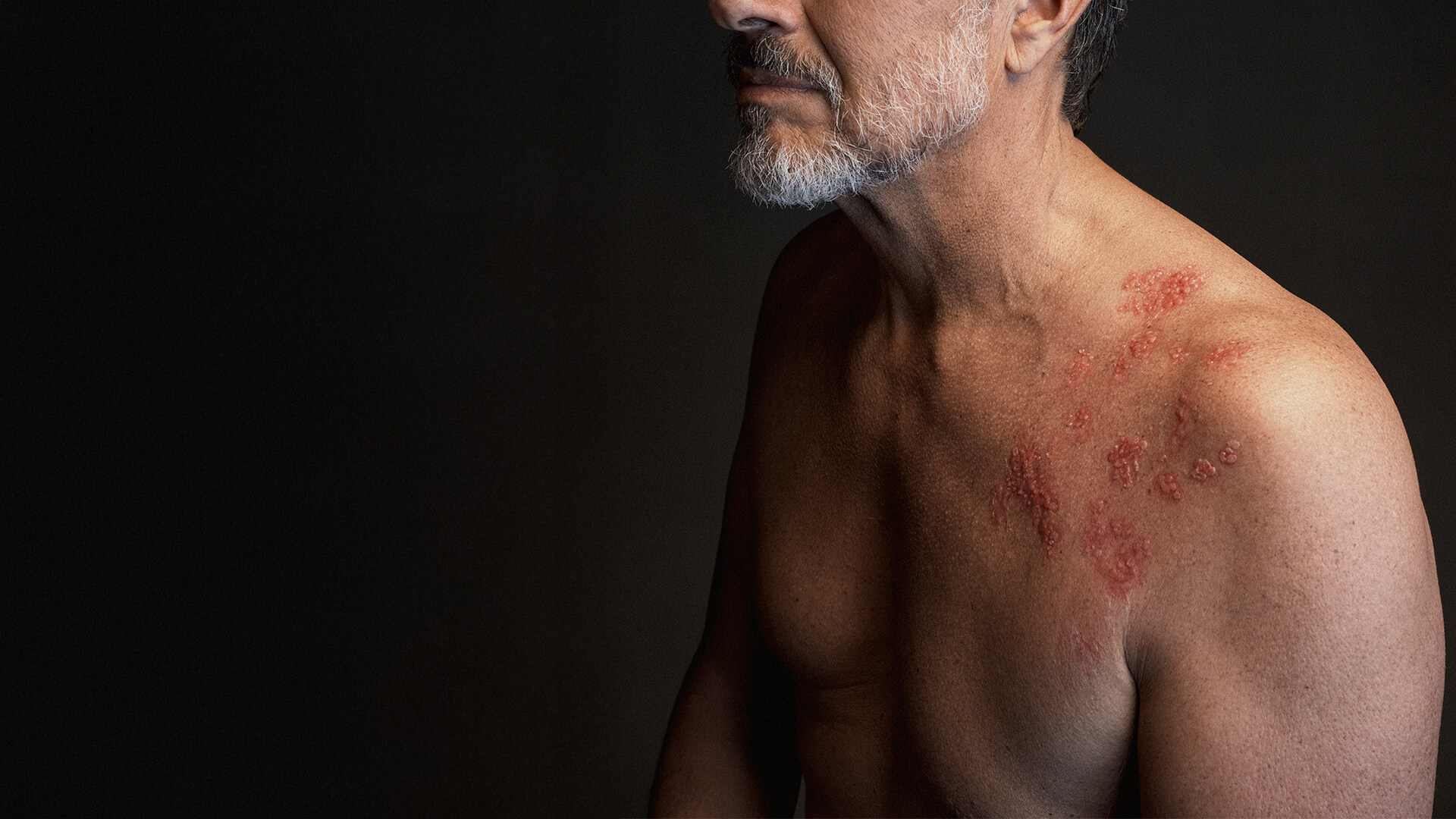
The shingles rash
Shingles is a viral infection that causes a painful rash, which typically develops on one side of the body as a single stripe of blisters and lasts for 2–4 weeks.1–3 Shingles is also known as herpes zoster and locally, as snake disease (生蛇) or kayap ular.
What causes shingles?
Shingles is caused by the same virus that causes chickenpox, known as the varicella-zoster virus.1,2 After a person recovers from chickenpox, the virus lies inactive within certain nerve cells called the dorsal root ganglia without causing any problems.1,2 However, the virus can reactivate later in life, causing shingles.1,2
Who is at risk?
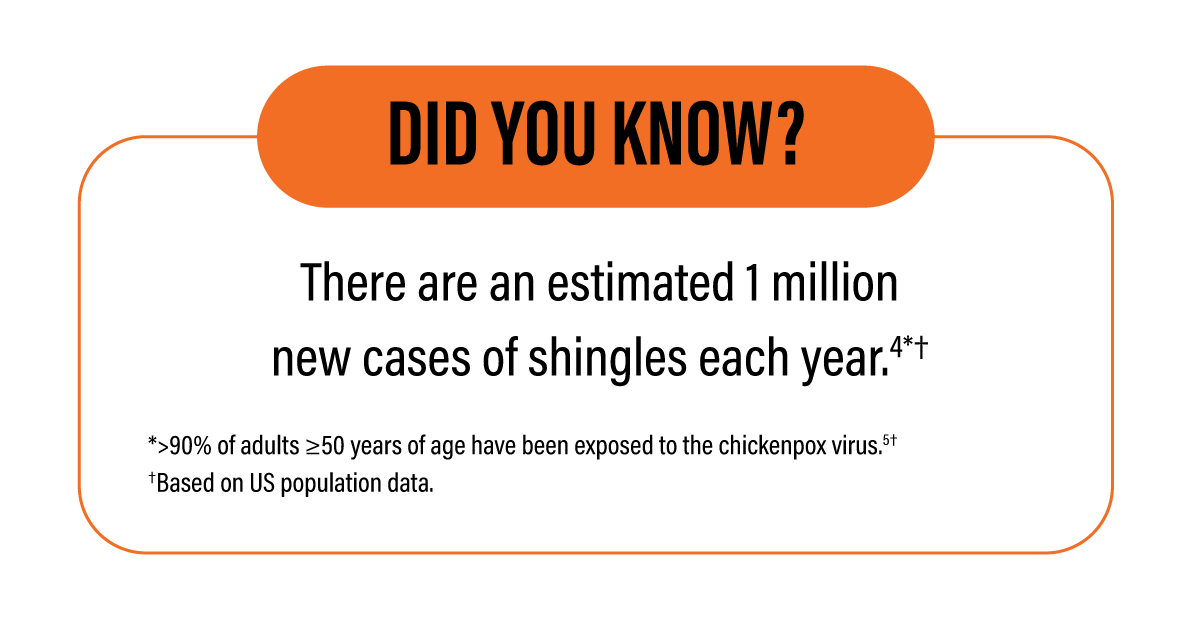
Anyone who has had chickenpox can develop shingles, but it is more common in people over 50 years of age† and those with a weakened immune system.1–3
What are the symptoms of shingles?
The typical symptom of shingles is a painful rash.1–3,6 It usually starts with a pain that is often described as burning, stabbing and throbbing at the affected site.1 Other symptoms that can occur include fever, headache, chills, fatigue and upset stomach.1,3,6
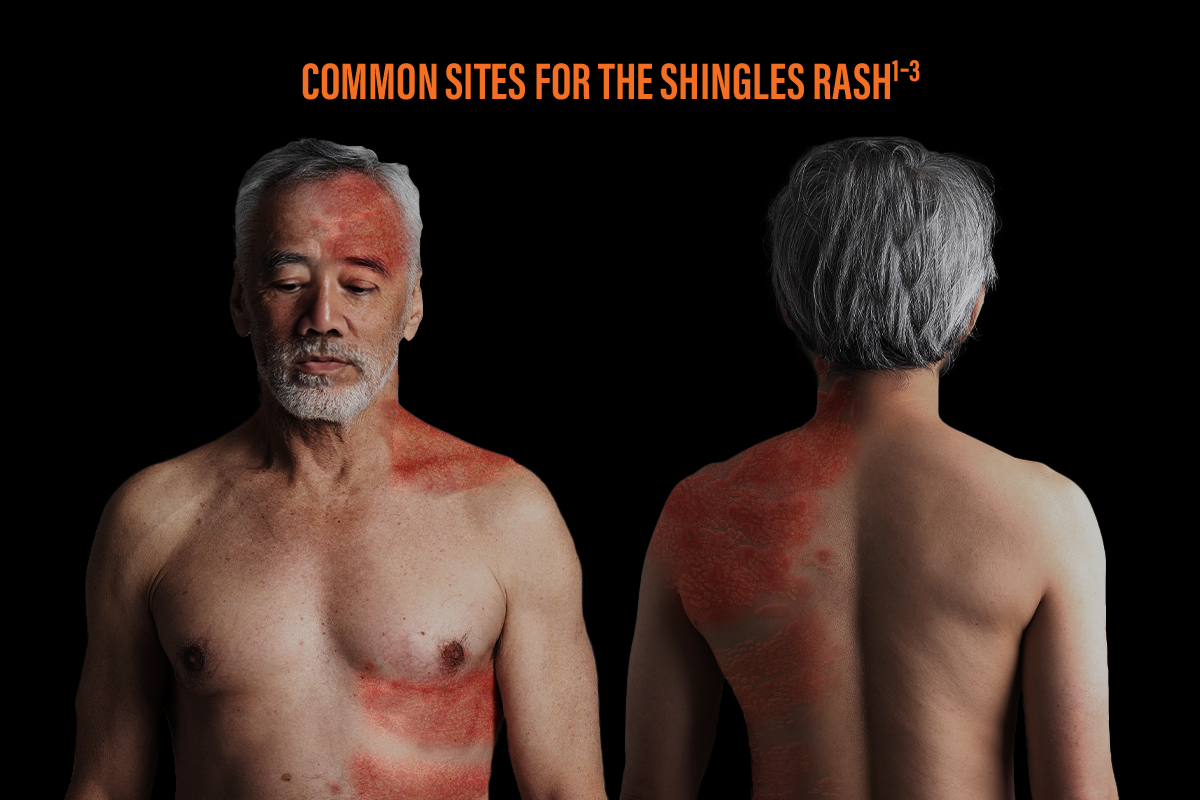
Shingles usually appears as a band on one side of the body or the face.1–3,6 It very rarely crosses over to the other side.6 This unique pattern occurs because the rash follows the path of the specific nerve where the virus has reactivated.1–3 The most common site for the rash to appear is the torso, though it can also affect the face and near the eyes.1–3,6
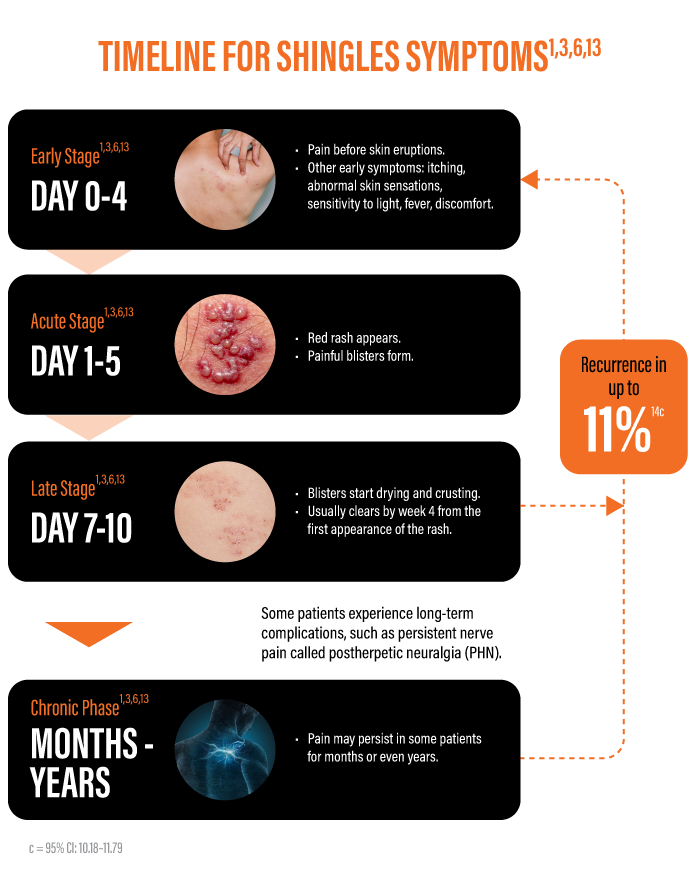
The skin over the affected area forms fluid-filled blisters that eventually crust over and clear.6 The whole process can last between 2–4 weeks.3,6 The pain of shingles is usually experienced through the early to late stage but can also become chronic, as shown in the “Timeline for shingles symptoms.”1,3,6
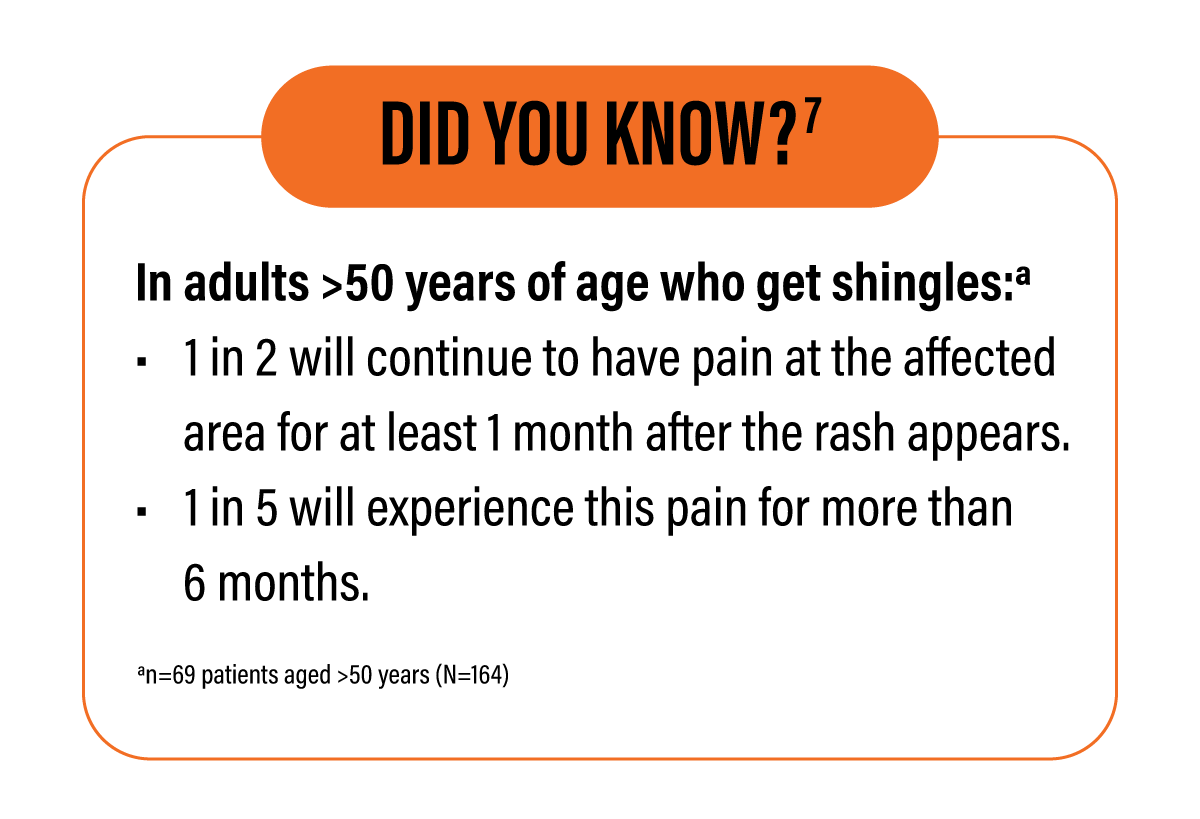
Pain is an important symptom of shingles and is often described “burning,” “throbbing” or “stabbing.”1 The persistent nerve pain that lasted after the rash has healed could last for months to years and sometimes requires painkillers.1–3,6
Is shingles contagious? How does shingles spread?
Shingles itself cannot be spread from one person to another. However, the virus that causes shingles is contagious.1,2 If you have shingles, you can pass the virus to someone who has never had chickenpox or been vaccinated against it if they come into contact with your open blisters (i.e., parents or grandparents of small infants should be wary).1,2
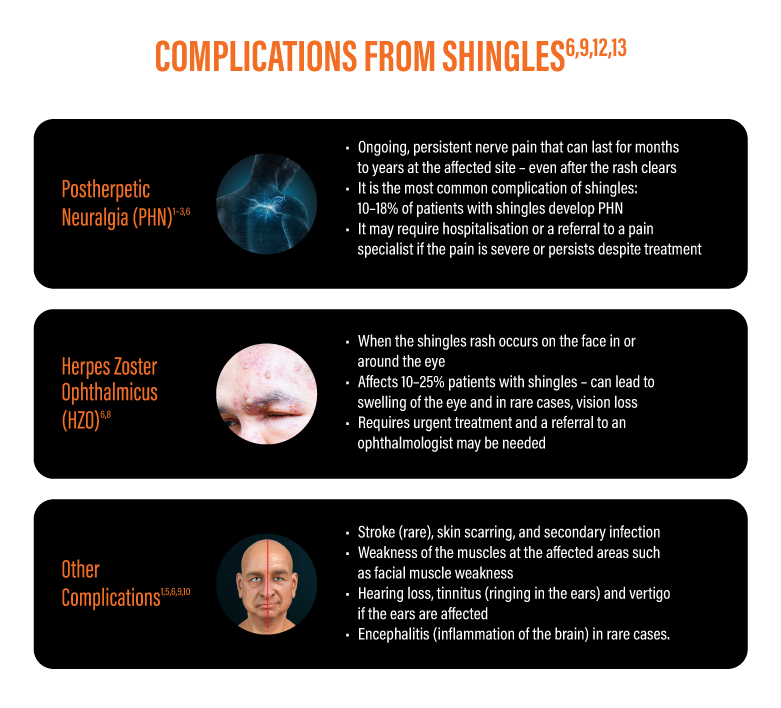
Complications from the shingles rash
After treatment, most individuals recover from shingles with no complications.3,6 However, some patients experience complications from shingles that can last for months to years after the rash clears.1–3,6
The impact of shingles on quality of life
The symptoms and complications of shingles can impact an individual’s daily life, such as impeding work productivity, movement, sleep and enjoyment of general activities.7 In older patients, the pain itself can lead to anxiety, mood disturbances and depression.11 It can also impact carers or family due to days of work lost from taking care of the patient.12
There are also direct costsb (e.g., medications, doctor consultations and hospitalisation) and indirect costsb (e.g., medical leave, loss of productivity) to consider when looking at the overall impact of shingles.12
For these reasons, early shingles treatment1 and prevention are important.1
Read real patient accounts about their experience with shingles here.
a n=69 patients aged >50 years (N=164)
b Based on data from Europe
c N=11,716
- World Health Organization. Shingles (herpes zoster): Fact sheets. Available at: https://www.who.int/news-room/fact-sheets/detail/shingles-(herpes-zoster). Accessed 17 September 2025.
- Health Hub. Herpes zoster (shingles). Available at: https://www.healthhub.sg/health-conditions/herpes_zoster. Accessed 21 November 2025.
- Centers for Disease Control and Prevention. Shingles symptoms and complications. Available at: https://www.cdc.gov/shingles/signs-symptoms/index.html. Accessed 17 September 2025.
- Wang, T., et al. (2020). Quantitative proteomic analysis of human plasma using tandem mass tags to identify novel biomarkers for herpes zoster. Journal of Proteomics, 15(225):103879.
- Kilgore, P.E., et al. (2003). Varicella in Americans from NHANES III: Implications for control through routine immunization. Journal of Medical Virology, 70(Suppl 1):S111–118.
- Centers for Disease Control and Prevention. Clinical features of shingles (herpes zoster). Available at: https://www.cdc.gov/shingles/hcp/clinical-signs/index.html. Accessed 17 September 2025.
- Goh, C. L. & Khoo L. (1997). A retrospective study of the clinical presentation and outcome of herpes zoster in a tertiary dermatology outpatient referral clinic. International Journal of Dermatology, 36(9):667–672.
- Shaikh, S. & Ta, C. N. (2002). Evaluation and management of herpes zoster ophthalmicus. American Family Physician, 66, 1723–1730.
- Adour, K. K. (1994). Otological complications of herpes zoster. Annals of Neurology, 35(Suppl), S62–S64.
- Genetic and Rare Diseases Information Centre. Ramsay Hunt syndrome. Available at: https://rarediseases.info.nih.gov/diseases/7525/ramsay-hunt-syndrome. Accessed 3 December 2025.
- Oster, G., et al. (2005). Pain, medication use, and health-related quality of life in older persons with postherpetic neuralgia: Results from a population-based survey. Journal of Pain, 6, 356–363.
- Gatar, A., et al. (2015). The humanistic, economic and societal burden of herpes zoster in Europe: A critical review. BMC Public Health, 15, 193.
- Johns Hopkins Medicine. Shingles. Available at: https://www.hopkinsmedicine.org/health/conditions-and-diseases/shingle. Accessed 16 December 2025.
- Tseng, H. F., et al. (2020) The epidemiology of herpes zoster in immunocompetent, unvaccinated adults ≥50 years old: Incidence, complications, hospitalization, mortality, and recurrence. The Journal of Infectious Diseases 222(5), 798–806.
- GSK is not responsible for third-party website content.