


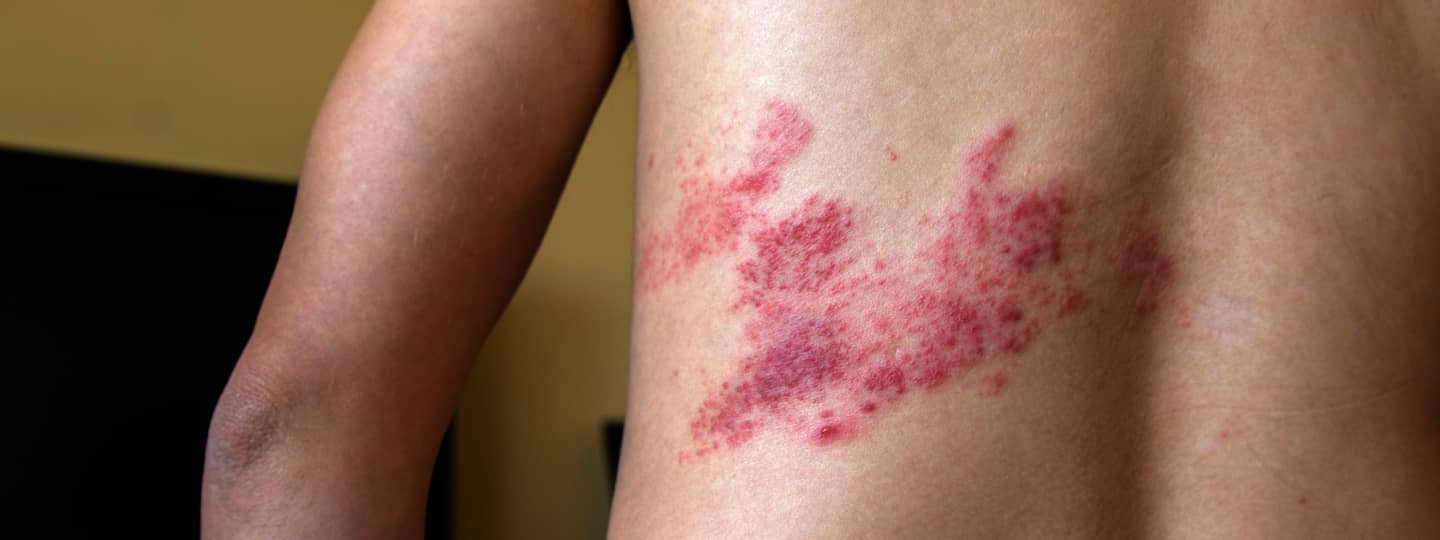
Shingles is caused by the reactivation of chickenpox virus (i.e., varicella-zoster virus).1,2 It is known for causing a painful blistering rash, affecting one side of the body.1–3 Other symptoms include chills, fever, headache, fatigue, and upset stomach.1–3 Shingles most commonly occurs in people aged 50 or older, with almost all older adults at risk.1,2
There is no cure for shingles but seeking treatment as soon as possible can help speed up recovery. Ideally, one should receive shingles treatment within 72 hours of developing symptoms.1
There are also preventative options that can protect a person from developing shingles symptoms and complications in the first place.1 Maintaining a healthy lifestyle (e.g., proper nutrition, regular exercise, sufficient sleep, and stress management) can help support immune function and general health.4 Vaccination is another method for preventing shingles.1
Is shingles vaccination recommended?
Stop the story before it begins. Speak to your doctor about shingles prevention.
- World Health Organization. Shingles (herpes zoster): Fact sheets. Available at: https://www.who.int/news-room/fact-sheets/detail/shingles-(herpes-zoster). Accessed 17 September 2025.
- Albrecht, M.A., Levin, M.J. (2025) Epidemiology, clinical manifestations, and diagnosis of herpes zoster. UpToDate. Available at: https://www.uptodate.com/contents/epidemiology-clinical-manifestations-and-diagnosis-of-herpes-zoster. Accessed 17 September 2025.
- Centers for Disease Control and Prevention. Shingles symptoms and complications. Available at: https://www.cdc.gov/shingles/signs-symptoms/index.html. Accessed 17 September 2025.
- Centers for Disease Control and Prevention. Healthy habits: Enhancing immunity. Available at: https://www.cdc.gov/healthy-weight-growth/about/enhancing-immunity.html. Accessed 26 September 2025.
- GSK is not responsible for third-party website content.