


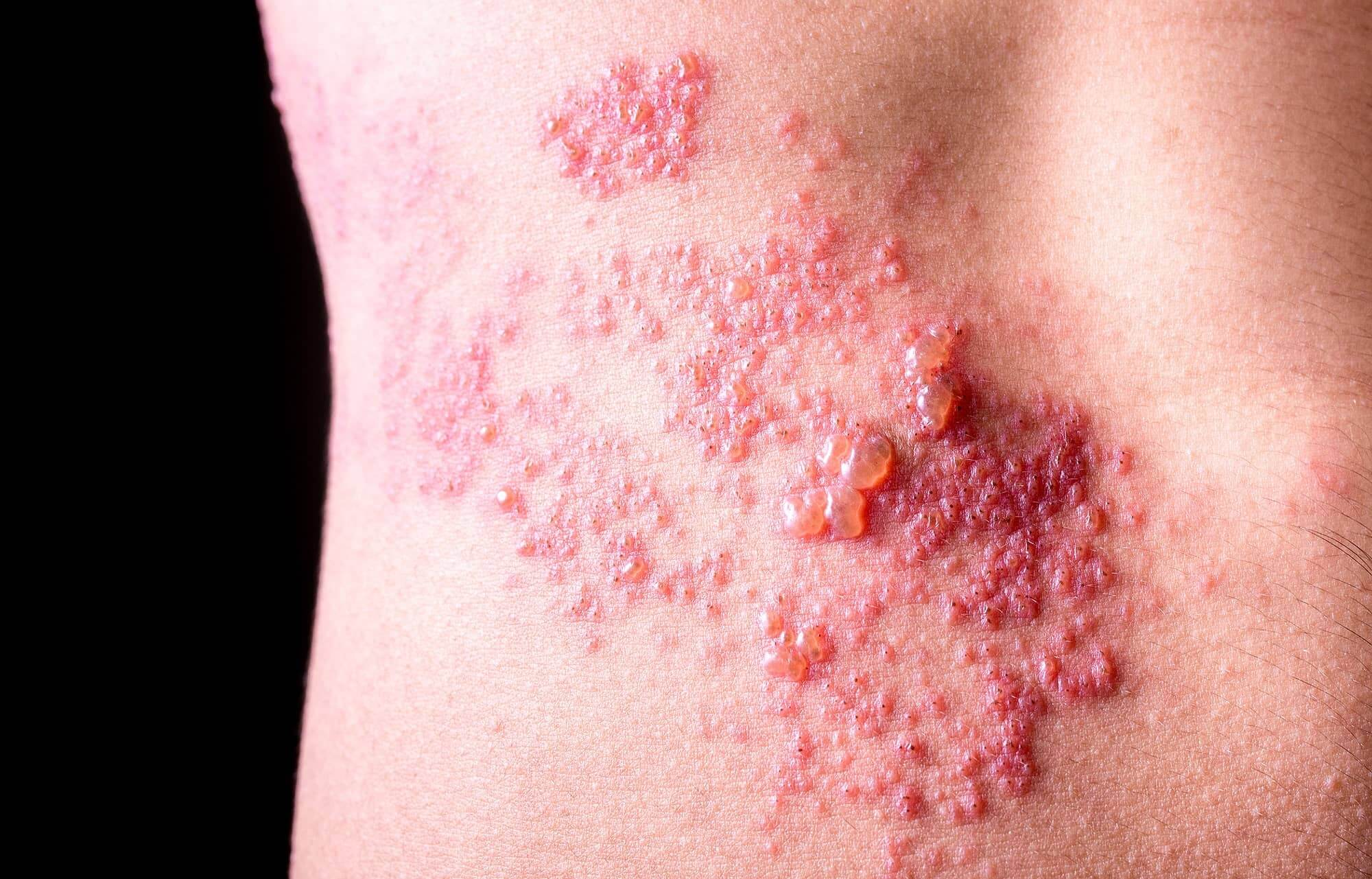
Shingles is typically characterised by a blistering rash, which is often extremely painful and can lead to long-term complications in some.1,2 It is caused by the reactivation of the chickenpox virus (i.e., varicella-zoster virus)1,2 and is especially more common in individuals aged ≥50 years old, those with a weakened immune system, existing chronic diseases (e.g., diabetes), and other risk factors.1,2
When to see the doctor
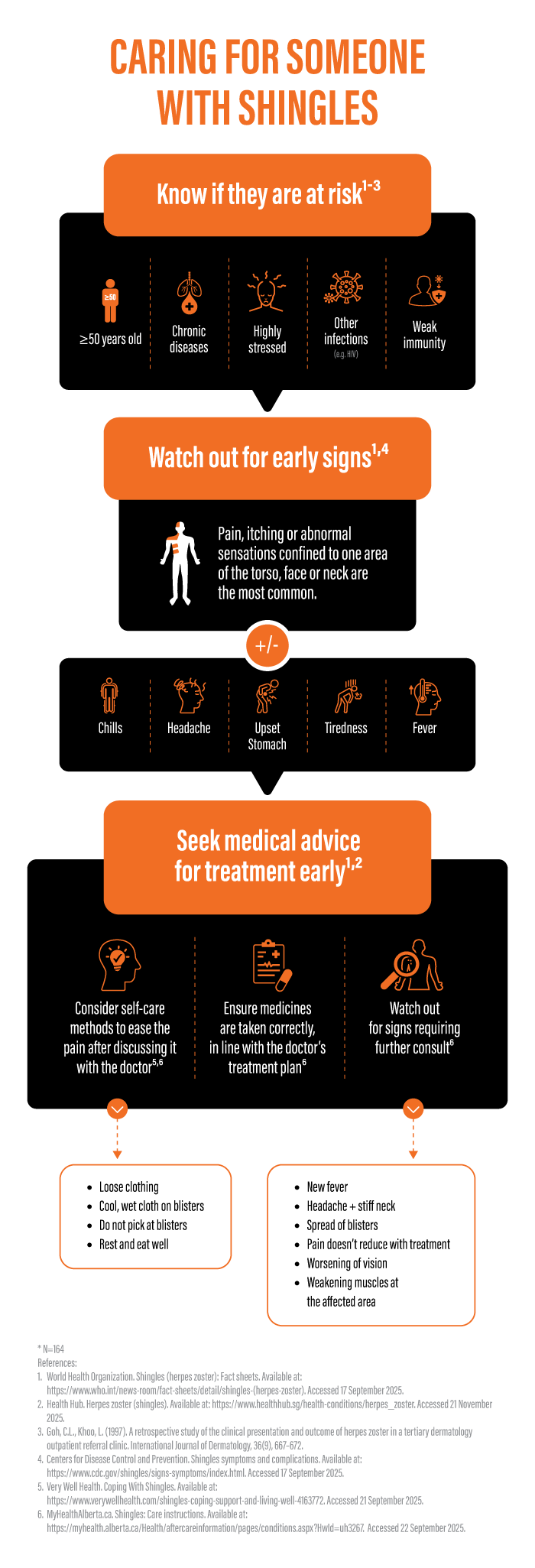
A study in Singapore found that 41% of patients experienced this kind of pain 3–5 days before their blisters appeared.*3 If your loved one is aged 50 or older and therefore at higher risk for shingles,1,2 be aware of its early signs.
Before a rash even appears, many people experience abnormal sensations like pain, itching, tickling or tingling.1,4 These sensations typically occur in one specific area, almost always on just one side of the body.1,4 While the torso is the most common location, these sensations can also affect the face and near the eye.1,4
In fact, some individuals might also complain of chills, fever, headache, tiredness and upset stomach.1,4 If you notice these symptoms in someone at risk,1,2,4 encourage them to see a doctor promptly. Early consultation is crucial, as treatment works best when started immediately to reduce the severity of the rash and short-term pain.1,2
How can you care for someone with shingles?
If a loved one has been diagnosed with shingles, your doctor may discuss self-care methods to help manage symptoms, along with prescribing treatments. These include5,6:
- Take the medications exactly as the doctor prescribed.
- Apply a cool, wet cloth over the blistered area to ease the pain and itching.
- Wear loose, comfortable clothing made from natural fibre.
- Get plenty of rest, eat well and avoid stress as much as possible.
When to seek medical support during shingles
While caring for someone who has been diagnosed with shingles, watch for these warning signs and contact a doctor immediately if any occur6:
- A new fever develops, or an existing fever gets worse.
- A severe headache or stiff neck occurs.
- They have trouble thinking clearly.
- The rash spreads to the face, particularly near the eyes or nose.
- They complain of any changes or worsening in their vision.
- They are unable to move the muscle in the affected area.
- New blisters appear on other parts of the body.
- The pain persists or worsens despite taking pain medications as prescribed.
If you notice any of the above, contact their doctor to seek advice and further treatment. Find out if your loved one is at risk for shingles.
* N=164
- World Health Organization. Shingles (herpes zoster): Fact sheets. Available at: https://www.who.int/news-room/fact-sheets/detail/shingles-(herpes-zoster). Accessed 17 September 2025.
- Health Hub. Herpes zoster (shingles). Available at: https://www.healthhub.sg/health-conditions/herpes_zoster. Accessed 21 November 2025.
- Goh, C.L., Khoo, L. (1997). A retrospective study of the clinical presentation and outcome of herpes zoster in a tertiary dermatology outpatient referral clinic. International Journal of Dermatology, 36(9), 667–672.
- Centers for Disease Control and Prevention. Shingles symptoms and complications. Available at: https://www.cdc.gov/shingles/signs-symptoms/index.html. Accessed 17 September 2025.
- Very Well Health. Coping With Shingles. Available at: https://www.verywellhealth.com/shingles-coping-support-and-living-well-4163772. Accessed 21 September 2025.
- MyHealthAlberta.ca. Shingles: Care instructions. Available at: https://myhealth.alberta.ca/Health/aftercareinformation/pages/conditions.aspx?HwId=uh3267. Accessed 22 September 2025.
- GSK is not responsible for third-party website content.